


How to Get Valid Data From Your Job Interview
In the job interview, you can gather good, valid data that you can use for your final selection. But interviews don't always turn out the same way, so you need to create some frameworks that apply across every interview, to make sure you get usable data.
The job interview is a big part of the recruitment process, and it's where you gather much of the data you'll use to make your final choice. But no two conversations run the same way, so how do you make sure you get the data you actually need? The answer is a consistent framework, built through a structured interview guide. It also helps minimise bias.
An interview guide is a set of topics or questions you want answered during the interview. The order is only a suggestion and can change as the conversation unfolds.
At its core, your interview guide should ask about the qualifications and competencies the hiring team is actually looking for.
How to Get Valid Data From Your Job Interview
When you run your interviews in a structured way, interviews combined with testing become a highly valid method for predicting fit and performance.
The interview gives you the foundation and knowledge to judge whether there's a match, or rather, it lets both you and the candidate judge whether there's a mutual fit. It works both ways: interviews are an excellent opportunity for the expectation alignment that matters so much.
The more and better data you collect, the more confident you can be in the match. Structured interviews mean every candidate is asked the same questions. That reduces bias, and it also turns the interview into a source of quality data. When your framework stays consistent, you can compare candidates on an objective basis, though of course that places real demands on you as the interviewer.
Considerations About Structure, Method and Number
You'll need to decide what shape your interviews take: by phone, in person, or digitally. You'll also need to decide whether candidates go through one interview round or several.
In our example, we've split the process into two interviews, a first and a second. Whether you use multiple rounds or fold everything into one is entirely up to you and your process.
It's worth creating a friendly, safe and trustworthy atmosphere throughout. Most candidates feel some nerves going into an interview, and nerves can affect how they come across. The more relaxed and equal the conversation feels, the better the conversation, and the better your basis for deciding.
The First Interview
For the first interview, it can make sense to focus on the job itself and on technical competence, then move on to the candidate's skills and experience. This is where you uncover motivation and align expectations.
Ask questions tied to the candidate's competencies that come straight from your job profile. Ask questions that give you data on the candidate's behaviour and cognitive level too.
A good job interview runs on a fixed framework. Download our interview guide here and get quality data from your interviews.
The Second Interview
The second interview is your chance to confirm or challenge the impressions from the first. You can ask about things that weren't covered in enough depth the first time, or that matter to clarify before making a decision.
If the candidate has completed a personality or cognitive test, this is a good moment to explore their behavioural preferences and cognitive abilities in more depth.
Some test systems can generate structured interview guides of their own, with questions tailored to reveal the candidate's specific profile. Interviewers often find this genuinely useful.
Legal Considerations
It's easy to accidentally ask an illegal question, but what counts as one? By law, you can't assess a candidate based on questions about, for example, health, previous sick leave, pregnancy, religion, race, age, sexual orientation or political views.
These questions relate to discrimination, so steer well clear of that territory.
Get Inspiration for the Interview
If you need inspiration for what questions to ask in an interview, our interview guide is a good place to start. The guide is particularly designed for the first interview.
Download our template for free, cover everything comprehensively, and gain relevant knowledge about your candidates when you interview them in the first conversation.
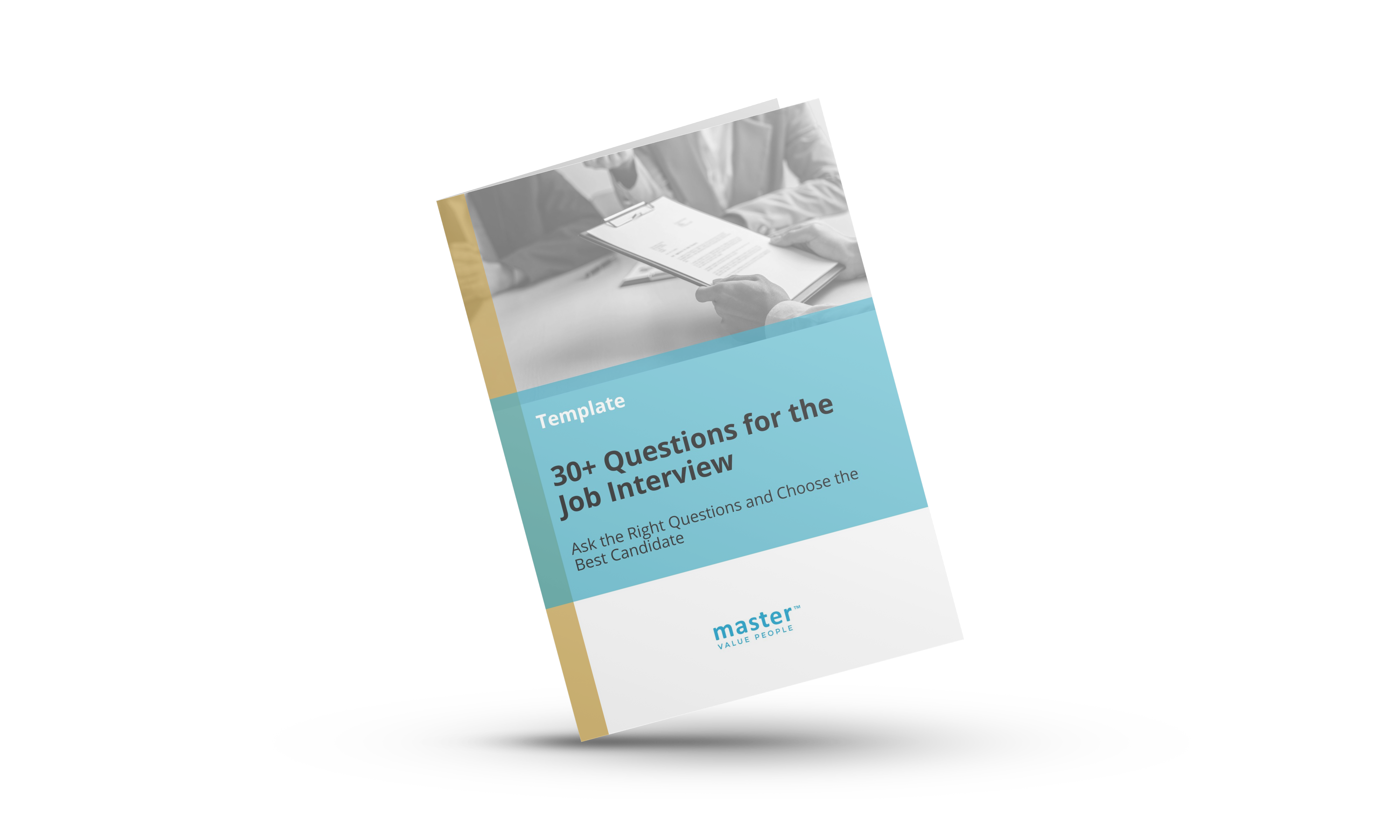
Get Inspiration for a Structured Interview
Download our template, cover everything comprehensively, and gain relevant knowledge about your candidates when you interview them in the first job interview.
- Bring structure to your recruitment
- Ask the right questions in the job interview
- Evaluate your candidates on an objective basis


